
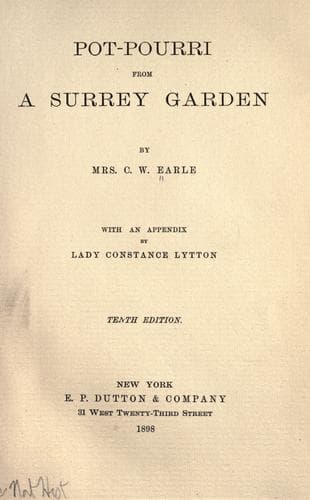
Pot-pourri from a Surrey garden
1898Maria Theresa Earle · 227 readable pages · 0 recipe records · miscellaneous household book combining garden diary, cookbook, and domestic essays
From the librarian's dossier · AI-generated, grounded in the scanned text
Pot-pourri from a Surrey Garden (1898) is Maria Theresa Earle's miscellaneous chronicle of a year in her Surrey garden, interwoven with cookery, book collecting, domestic economy, and reflections on raising children and furnishing a home. Structured as a garden diary running from January through December, the book moves fluidly between practical horticultural advice, dozens of recipes (many French, contributed by a chef and gathered during travel), commentary on rare botanical books from her personal library, and essays on child-rearing, women's education, house furnishing, and even nursing and amateur art. The tone is conversational and personal, reflecting the habits and opinions of a well-read, well-traveled Victorian gentlewoman writing for others who garden, cook, and manage households on modest suburban grounds near London. Readers encounter seasonal advice on plants and vegetables alongside society commentary, book reviews of gardening literature old and new, and a substantial closing section devoted to Japanese flower arrangement. The result is less a manual than a commonplace book, offering a wide-angle view of genteel domestic and intellectual life in late Victorian England, useful today both as a practical historical cookbook and gardening guide and as a window into the era's assumptions about class, gender, and household management.
The book follows a month-by-month diary structure beginning with a preface and January entries and continuing through the calendar year, with headings marking months (January through December) and specific dated entries within them. Interspersed with the seasonal garden and kitchen material are extended digressions: a survey of the author's antiquarian gardening book collection (sections 4, 5, 13, 15), essays on child-rearing and education (sections 16 through 20), a discussion of house furnishing (sections 17 and 18), and a closing dedicated section on the Japanese art of flower arrangement (sections 21 and 22). Recipes, mostly French or English domestic dishes, appear scattered throughout rather than gathered in a single culinary section, embedded within the diary flow alongside plant care notes and literary asides.
Read the book
227 readable pages. A dot marks pages with recipe records.