
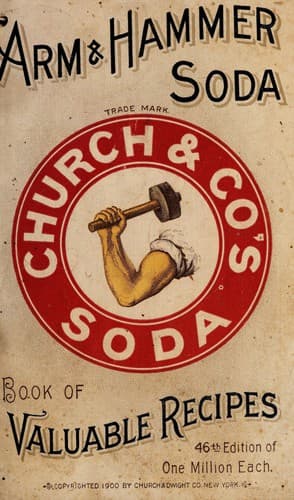
Arm & Hammer Soda book of valuable recipes
1900Church & Dwight Co · 24 readable pages · 106 recipe records · promotional household cookbook
From the librarian's dossier · AI-generated, grounded in the scanned text
This slim 1900 promotional cookbook was issued by Church & Dwight Co. to advertise Arm & Hammer Brand Soda, positioning pure baking soda paired with sour milk as a superior, healthier, and more economical alternative to commercial baking powders. Structured as part recipe collection and part sales pitch, it opens with an introduction arguing against store-bought baking powder before moving into practical kitchen instructions. The bulk of the book offers roughly a hundred anchored food recipes spanning soups, breads, biscuits, griddle cakes, pastries, puddings, cakes, cookies, frostings, and candies, all built around soda-based leavening. Beyond the kitchen, the book expands into household and personal territory, presenting soda as a multipurpose remedy for cleaning, pest control, dental care, skin ailments, and even fire suppression, alongside farm and dairy applications. Interspersed throughout are direct manufacturer appeals extolling the brand's purity and strength over rival products. For the modern reader, this book offers a window into turn-of-the-century domestic economy, home remedies, and the era's blending of cookery with commercial advertising and folk medicine. It is best approached less as a standalone culinary authority and more as a branded household manual reflecting the marketing practices and domestic anxieties of its time.
The book is organized into three broad sections that move from cooking to household and medicinal uses. Section 1 opens with an introduction and brand promotion, followed by general directions on using soda with sour milk, then recipes for soups, breads, biscuits, and pastries. Section 2 continues the recipe collection into puddings, desserts, cakes, cookies, sauces, and frostings, while also introducing candy recipes and beginning the transition into household applications such as jewelry cleaning and medicinal remedies. Section 3 shifts fully away from cooking into practical household tips, medical remedies, agricultural advice, and personal care uses, closing out the book's utilitarian and promotional content. Headings throughout suggest a catalog-like structure organized by recipe type and use-case category rather than strict alphabetical order.
Recipes from this book
106 records extracted from the text, showing the first 50 in reading order. Each links to a modern interpretation.
Read the book
24 readable pages. A dot marks pages with recipe records.