
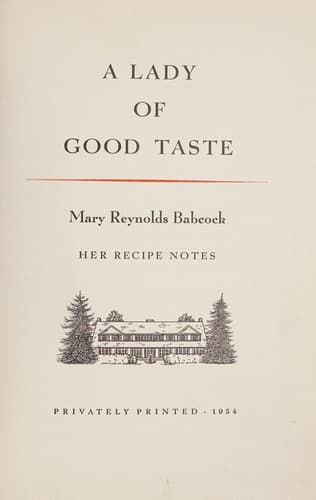
A lady of good taste
1954Mary Katherine Reynolds Babcock · 38 readable pages · 180 recipe records · general household cookbook
From the librarian's dossier · AI-generated, grounded in the scanned text
A lady of good taste is a 1954 personal cookbook compiled by Mary Katherine Reynolds Babcock, blending home-style American cooking with sophisticated European-inspired dishes. Drawing on 180 anchored food records, the book moves from appetizers and sauces through fish, meat, poultry, and vegetables, then into breads, salads, cakes, pies, and desserts, closing with menus reportedly served at Reynolda, the Reynolds family home in North Carolina. The prefatory material frames the collection as an expression of Babcock's approach to feeding her family, balancing nutrition, taste, and personal preference. Recipes range from everyday preparations like pot roast and T-bone steak to elaborate dishes such as pheasant in sour cream, oysters and crabmeat creamed in champagne, and beef rolls in claret. Preserving, pickling, and sauce-making receive substantial attention alongside formal multi-course dining with wine pairings. Initials credit some contributors, suggesting recipes gathered from family and acquaintances. For modern readers, the book offers a window into affluent mid-century American entertaining, where technique and presentation mattered as much as flavor. It is best approached as a personal, regionally rooted document rather than a systematic culinary reference, valuable for its blend of domestic practicality and elegant hospitality.
The book is organized into four broad sections that follow a roughly progressive meal structure. Section 1 opens with prefatory material on the author's philosophy of cooking, then moves through appetizers, sandwiches, sauces, preserving, and soups into the start of fish dishes. Section 2 continues fish and shellfish before covering meats, poultry, barbecue preparations, casseroles, and vegetables. Section 3 shifts to vegetable cookery, breads, salads, and then desserts proper, beginning with cakes and cookies and introducing pies. Section 4 concludes with a fuller dessert and pudding collection, a distinct menu section titled Some Menus at Reynolda showing multi-course dinners with wine pairings, and a final index organizing recipes by category across the whole book.
Recipes from this book
180 records extracted from the text, showing the first 50 in reading order. Each links to a modern interpretation.
Read the book
38 readable pages. A dot marks pages with recipe records.