
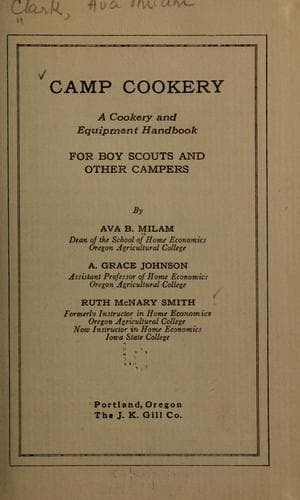
Camp cookery (Milam, for Boy Scouts)
1918Ava B. Milam · 30 readable pages · 88 recipe records · outdoor and camp cookery handbook
From the librarian's dossier · AI-generated, grounded in the scanned text
Camp cookery (1918) by Ava B. Milam is a practical handbook written for Boy Scouts and their leaders, teaching outdoor cooking as both a survival skill and a nutritional discipline. Produced during the era of organized scouting movements, the book blends dietary science with rugged fieldcraft, instructing young readers on how to plan meals, select equipment, and prepare food with minimal resources in wilderness settings. It moves from foundational concerns like water safety and campsite selection to detailed rationing plans for hikers and pack-horse expeditions, then into recipes covering breads, soups, vegetables, meats, game, fish, and desserts. The tone is instructional and utilitarian, reflecting a period concern with efficient nutrition, portable food supplies, and self-reliance in the outdoors. Notably, the book closes with a pedagogical section, suggesting it was designed not just as a personal reference but as a teaching tool for structured lessons and outdoor practice sessions. Modern readers will find a window into early twentieth-century ideas about diet, physical labor, and scouting culture, presented through recipes and guidance intended for boys and young men learning to cook competently away from a home kitchen.
The book unfolds in three broad movements. It opens with foundational material: a preface, table of contents, and guidance on diet, food supplies, and equipment, including ration lists and a U.S. Forest Service sustenance table for groups of varying size, plus practical skills like fire building and constructing a fireless cooker (section 1). The middle portion explains nutritional groupings of food and provides meal plans for scouts with and without pack horses, followed by recipes for breads, cereals, vegetables, soups, and meat curing (section 2). The final portion covers advanced cooking methods such as stewing, braising, roasting, barbecuing, and pit-baking, with attention to game and fish preparation, an extensive dessert section, and closes with an educational outline for teaching camp cookery through structured lessons, plus an index (section 3).
Recipes from this book
88 records extracted from the text, showing the first 50 in reading order. Each links to a modern interpretation.
Read the book
30 readable pages. A dot marks pages with recipe records.