
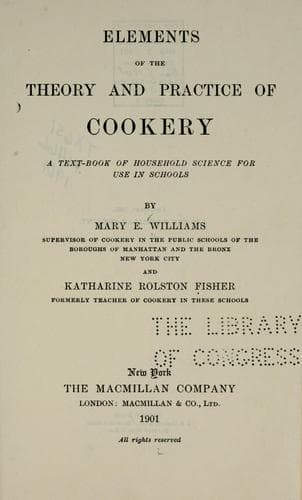
Elements of the theory and practice of cookery
1901Williams, Mary E. · 155 readable pages · 0 recipe records · domestic science textbook and cookery manual
From the librarian's dossier · AI-generated, grounded in the scanned text
Elements of the Theory and Practice of Cookery (1901) by Mary E. Williams is a domestic science textbook that fuses recipe instruction with laboratory-style chemistry and physiology lessons. Rather than a simple recipe collection, it teaches cooking as applied science, walking readers through stove management, water and cleanliness, the composition of eggs, milk, meat, flour, and fats, and the biological processes of yeast fermentation and digestion. Recipes for everyday dishes such as baked potatoes, custards, breads, croquettes, soups, salads, cakes, and cocoa are embedded within explanatory sections that emphasize why techniques work, drawing on contemporary understanding of nutrition, bacteria, and food value. The book also addresses household management topics like fuel selection, dishwashing, and sanitation, along with specialized chapters on infant feeding, invalid cookery, and beverage preparation. Structured like a classroom manual with numbered paragraphs, experiments, and reference tables, it reflects an educational approach to cooking likely intended for students in home economics or domestic science courses. Modern readers will find a text that treats the kitchen as a site of scientific inquiry, blending practical guidance with period nutritional theory, making it a valuable window into how cooking was taught and understood at the turn of the twentieth century.
The book proceeds from kitchen fundamentals (stoves, fuel, water, cleaning, and basic chemistry in sections 2 and 3) through a graded sequence of foodstuff studies: starches and cereals, eggs and milk, baking chemistry and bread, meat selection and cookery, poultry and fish, fats and frying, fruits and vegetables, soups and salads, cakes and desserts, food preservation, infant and invalid feeding, and finally beverages including cocoa and chocolate (sections 4 through 15). Numbered paragraphs and headings organize each topic into explanatory text, laboratory-style experiments, tables, and interspersed recipes. The book closes with an extensive alphabetical index (section 16) and advertisements for related educational texts, confirming its use as a structured teaching manual rather than a straightforward recipe book.
Read the book
155 readable pages. A dot marks pages with recipe records.