
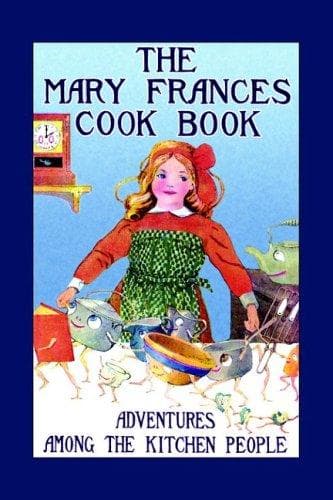
The Mary Frances cook book
1912Jane Eayre Fryer · 45 readable pages · 48 recipe records · juvenile household cookbook framed as fairy-tale narrative
From the librarian's dossier · AI-generated, grounded in the scanned text
The Mary Frances Cook Book (1912) by Jane Eayre Fryer is a children's cookbook wrapped in a fairy-tale narrative. It follows young Mary Frances as she learns to cook with the help of anthropomorphized Kitchen People, talking utensils and tools who guide her through recipes while her mother is away. The story blends whimsical fantasy, such as a speaking Toaster Man and Aunty Rolling Pin, with genuinely practical instruction in early twentieth-century domestic cooking. Readers follow Mary Frances from simple tasks like making toast and boiling potatoes to more ambitious undertakings, including preparing a full solo breakfast (which partially burns) and eventually cooking an entire multi-course dinner for her parents. Along the way the book weaves in gentle moral lessons, such as caution around strangers, alongside its culinary lessons. Written for a juvenile audience, it served both as entertainment and as a gentle introduction to household cookery for girls of the era. Modern readers will find it a charming artifact of early 1900s domestic education, offering a window into how cooking was taught to children through story, character, and repetition of technique rather than dry instruction.
The book is organized as a serialized narrative divided into numbered chapters, each built around a cooking lesson or kitchen event in Mary Frances' life. Recipes are numbered sequentially within the story (for example, No. 5, No. 6) and are embedded directly into the chapters rather than presented as a standalone reference list. The three surviving sections show progression across the book, from an introductory sequence establishing the fantasy premise and basic recipes (section 1), through skill-building episodes involving breakfast preparation and a moral lesson about strangers (section 2), to a later culminating chapter in which Mary Frances independently prepares a full dinner menu (section 5). The gap between sections 2 and 5 suggests additional chapters and recipes exist in the book that are not covered by the provided summaries.
Recipes from this book
48 records extracted from the text. Each links to a modern interpretation.
Read the book
45 readable pages. A dot marks pages with recipe records.