
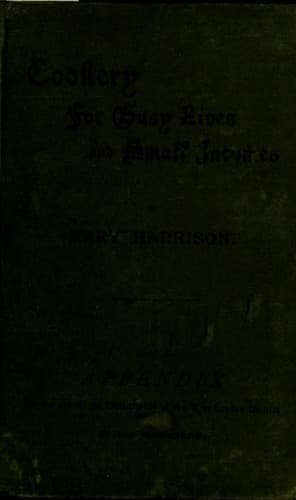
Cookery for busy lives and small incomes
1890Mary Harrison · 40 readable pages · 133 recipe records · general household cookbook
From the librarian's dossier · AI-generated, grounded in the scanned text
Cookery for busy lives and small incomes is an 1890 household cookbook by Mary Harrison, aimed squarely at readers managing tight budgets and limited time. Rather than indulgent or decorative cookery, the book concentrates on stretching inexpensive cuts of meat, offal, and cheap staples into filling, nourishing meals. It opens with meat and stock preparation, moves through fish and vegetables, then covers sauces, gravies, cold meat repurposing, curries, pastry, and invalid cookery, before closing with a practical index, kitchen maintenance advice, and a basic nutrition primer. The recurring emphasis throughout is economy: using bones and trimmings for gravy, reviving leftovers into hash or pies, and favoring stewing over roasting to tenderize tough joints. The inclusion of curry recipes, invalid foods like beef tea and gruel, and a closing section on the four classes of nutrients suggests a didactic aim, not just recipe delivery but household education. With 133 anchored food records across only four sections, the book reads as compact and dense, more a working manual for a frugal household cook than a leisurely reference. Modern readers will find it a useful window into late Victorian domestic economy, class-conscious cookery, and the era's blending of culinary and moral instruction around thrift and nutrition.
The book is organized into four broad sections that move from core protein cookery to supporting techniques and reference material. Section 1 lays the foundation with meat, poultry, offal, stocks, and soups. Section 2 turns to fish and vegetables, including pudding basics and sauces. Section 3 expands on sauces and gravies, cold meat repurposing, curries, pastry, pie recipes, and a notable block of invalid cookery and medicinal drinks, ending with jams and cheese. Section 4 closes the book with a detailed alphabetical index, instructions for cleaning kitchen utensils and ranges, and an educational appendix on food nutrition classes with a self-examination study guide keyed to page numbers, indicating the book doubled as an instructional text.
Recipes from this book
133 records extracted from the text, showing the first 50 in reading order. Each links to a modern interpretation.
Read the book
40 readable pages. A dot marks pages with recipe records.