
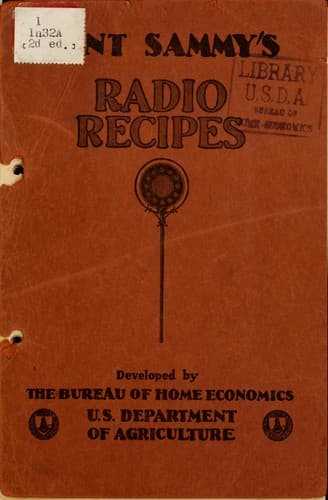
Aunt Sammy's radio recipes
1926United States. Department of Agriculture. Radio Service · 42 readable pages · 159 recipe records · general household cookbook
From the librarian's dossier · AI-generated, grounded in the scanned text
Aunt Sammy's Radio Recipes (1926) is a collection of scripts and recipes broadcast as part of the USDA Bureau of Home Economics' 'Housekeepers' Chats' radio program. Presented under the fictional persona of Aunt Sammy, the material was designed to reach American homemakers over the airwaves with practical, budget-conscious cooking advice organized around seasonal menus. The book moves through the calendar year, from October and November fare through Christmas and January dinners, offering recipes for meats, vegetables, preserves, candies, salads, and desserts alongside complete menu plans that cross-reference individual dishes. Readers will find roast veal shoulder, lamb stew, scrapple, fruit cakes, fondant candy, and novelty salads like Sunbonnet Sue alongside more everyday fare such as baked potatoes, apple sauce, and corn fritters. The tone throughout emphasizes economy, use of leftovers, seasonal ingredients, and accessible techniques suited to a home cook following along with a radio broadcast. As a government-issued domestic guide, it offers a window into official nutritional and household advice given to American families in the mid-1920s, presented in a warm, conversational voice meant to be heard rather than only read. It stands as both a practical recipe collection and a cultural artifact of early broadcast-era home economics outreach.
The book is organized into five sections that largely follow a seasonal and calendar structure. Section 1 opens with October and November menus and recipes. Section 2 continues with special occasion menus, a week of breakfast menus, and dishes organized around apples, soups, fish, salads, and preserves. Section 3 moves into holiday cooking, including Christmas dinners, candies, and festive dishes. Section 4 covers January menus alongside an extensive run of candies, cookies, and prepared dishes, with cross-references to page numbers for meal planning. Section 5 is a short closing set of six standalone recipes covering soup, seafood, vegetables, and dessert. Throughout, recipes are grouped under bolded dish-name headings, and many sections include full menus that assemble multiple individual recipes into complete meals.
Recipes from this book
159 records extracted from the text, showing the first 50 in reading order. Each links to a modern interpretation.
Read the book
42 readable pages. A dot marks pages with recipe records.