
Blue Ribbon cook book
1905Blue Ribbon Limited · 89 readable pages · 435 recipe records · general household cookbook
From the librarian's dossier · AI-generated, grounded in the scanned text
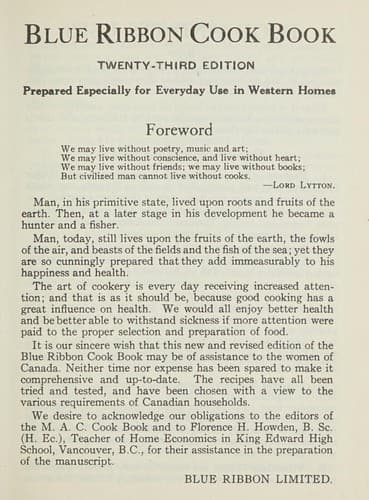
The Blue Ribbon Cook Book (1905) is a comprehensive Canadian household manual published by Blue Ribbon Limited, a company known for tea, coffee, spices, and baking products. Aimed at the everyday home cook, the book blends practical recipes with scientific nutrition advice, meal planning for different family members, and etiquette for both simple family meals and formal entertaining. Its scope is vast: soups, fish, meats, poultry, game, vegetables, salads, breads, cakes, desserts, candies, beverages, canning, preserving, invalid cookery, and even camp and bachelor cooking. The presence of 435 anchored food records reflects the sheer density of recipes packed into its nine sections. Readers will find not only recipes but troubleshooting advice for common kitchen mistakes, conversion tables, and guidance on selecting fresh poultry and fish. The book also reveals its commercial origins, frequently referencing Blue Ribbon branded products such as gelatin, jelly powders, baking powder, and spices within recipes. As a historical document, it offers a window into early twentieth-century domestic science, household management, and the era's approach to nutrition, food safety, and thrift. It is a useful and characterful artifact for readers interested in period foodways, home economics history, or Canadian culinary heritage.
The book is organized into nine sections that move from foundational knowledge to specific recipe categories. Section 1 opens with nutrition science, meal planning, table service, etiquette, and troubleshooting before introducing soups. Sections 2 and 3 continue through fish, meats, organ meats, poultry, and game. Section 4 covers vegetables, salads, and bread making. Sections 5 and 6 focus on baking: biscuits, muffins, griddle cakes, pastries, cakes, frostings, and cookies. Section 7 presents desserts, jellied dishes, frozen desserts, candies, and beverages, transitioning into fruit preparation and canning. Section 8 details canning, preserving, pickling, invalid cookery, and introduces bachelor and camp cooking. Section 9 concludes with further camp and practical cookery, luncheon dishes, spice usage, sandwiches, school lunches, cheese cookery, stove maintenance, and household tasks like dishwashing and butter care. The organization follows a logical progression from general household guidance to specific recipe categories, ending with practical and situational cooking advice.
Recipes from this book
435 records extracted from the text, showing the first 50 in reading order. Each links to a modern interpretation.
Read the book
89 readable pages. A dot marks pages with recipe records.