
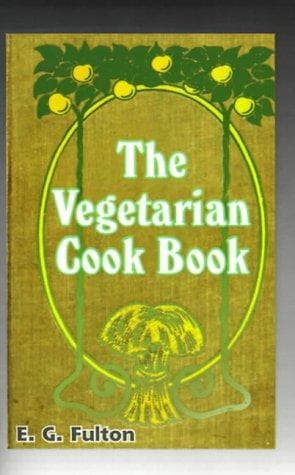
Vegetarian Cook Book
1904E. G. Fulton, Edward Fulton · 103 readable pages · 492 recipe records · general vegetarian household cookbook with domestic science and etiquette guidance
From the librarian's dossier · AI-generated, grounded in the scanned text
The Vegetarian Cook Book (1904) by E. G. Fulton and Edward Fulton is a comprehensive household cookbook rooted in early twentieth-century vegetarian reform movements. Organized around the belief that wholesome diet prevents illness more effectively than medical treatment, the book blends practical recipes with hygienic and nutritional instruction. Its nearly 500 anchored food records span soups, entrees, vegetable cookery, salads, breads, egg and dairy dishes, preserves, frozen desserts, and beverages. A distinctive feature is its extensive use of manufactured meat substitutes such as protose, nuttolene, and nut cero, reflecting ties to the Battle Creek Sanitarium diet system advertised in its closing pages. Recipes range from mock versions of meat dishes (mock chicken soup, vegetarian beef steak, mock turkey with dressing) to straightforward vegetable, grain, and fruit preparations. Beyond recipes, the book offers guidance on cooking science, food combinations, table etiquette, kitchen utensils, and canning methods, making it as much a manual of domestic science as a recipe collection. Modern readers will find it a valuable window into turn-of-the-century vegetarian ideology, commercial food products, and household management, presented with the earnest, instructional tone typical of reform-minded cookbooks of its era.
The book proceeds from cooking theory and soups (section 1) through main dishes and meat-substitute preparations (sections 2 and 3), vegetable cookery, sauces, and salads (sections 4 and 5), baking fundamentals (section 7), egg, dairy, sandwich, and fruit preparations (section 8), preservation and frozen desserts (section 9), and concludes with nutritional guidance, etiquette, menus, and a detailed index with manufacturer advertising (sections 10 and 11). Section 6 is not present among the summaries provided. Headings within sections show a mix of technique-focused chapters (boiling, steaming, leavening chemistry) and recipe-dense listings organized by ingredient or dish type.
Recipes from this book
492 records extracted from the text, showing the first 50 in reading order. Each links to a modern interpretation.
Read the book
103 readable pages. A dot marks pages with recipe records.