
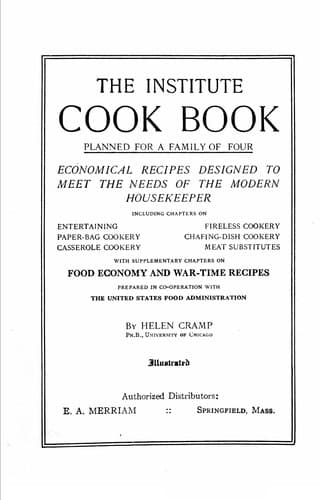
The Institute cook book
1913Helen Cramp · 195 readable pages · 1,040 recipe records · general household cookbook
From the librarian's dossier · AI-generated, grounded in the scanned text
The Institute Cook Book, published in 1913 by Helen Cramp, is a wide-ranging American household cookbook that moves from formal dining etiquette through the full sweep of home cookery: soups, fish, meats, poultry, vegetables, salads, desserts, baked goods, candy, preserving, beverages, and specialized techniques like fireless cooker, paper-bag, and chafing-dish cooking. Later sections, evidently added after the original 1913 publication, incorporate wartime food conservation material issued under Herbert Hoover's administration, suggesting this edition or a later printing was updated to reflect World War I rationing needs. The book blends refined dining conventions of its era, afternoon teas, evening collations, elaborate composed salads and molded desserts, with practical, economy-minded instruction, citing figures like Dr. Harvey W. Wiley on the nutritional value of cheaper meat cuts. It offers over a thousand anchored recipes covering nearly every category of domestic cookery known to an early twentieth-century American household. Modern readers will find a snapshot of a transitional culinary moment: aspirational European-influenced entertaining alongside emerging modern kitchen technologies (fireless cookers, chafing dishes) and, later, patriotic rationing guidance. The book is a useful primary source for understanding both everyday and occasion-based American cooking of the 1910s, as well as how domestic cookbooks adapted to wartime scarcity.
The book proceeds through a long sequence of thematic culinary chapters: dining service and etiquette; appetizers and soups; fish and shellfish; meat cookery fundamentals; poultry, game, forcemeats, sauces, and eggs; meatless dinners and vegetable substitutes; extensive vegetable cookery; entrees, salads, and desserts; puddings and frozen desserts; a gap in the numbered sections before bread and cake chapters resume; cakes, cookies, and frostings; pastry, pies, sandwiches, and cereals; candy and fruit preparation; canning, preserving, and beverages; fireless cooker and invalid cookery; further fireless cooker and paper-bag techniques; paper-bag, chafing-dish, and casserole cookery followed by an index. The final two sections depart from the original structure to present a 1918 wartime food conservation guide, with substitution charts, conservation recipes, and a nutritional and measurement reference table, indicating later material appended to the core cookbook.
Recipes from this book
1,040 records extracted from the text, showing the first 50 in reading order. Each links to a modern interpretation.
Read the book
195 readable pages. A dot marks pages with recipe records.