
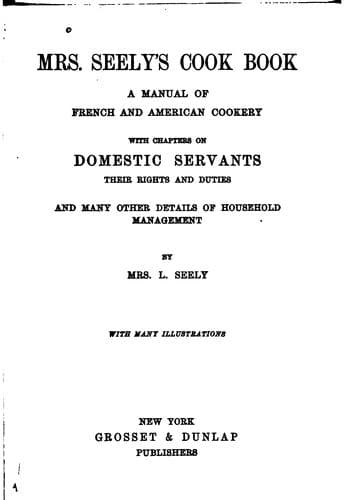
Mrs. Seely's Cook Book: A Manual of French and American Cookery : with ..
1902Lida Seely · 221 readable pages · 710 recipe records · general household cookbook with domestic service manual
From the librarian's dossier · AI-generated, grounded in the scanned text
Mrs. Seely's Cook Book (1902) is a substantial manual combining French-influenced haute cuisine with American household cookery, written for the mistress of a well-staffed home. Beyond recipes, it opens with lengthy guidance on managing domestic servants, their legal rights, duties, and daily schedules, before moving into hundreds of recipes organized by category: soups, fish and shellfish, meats and poultry, sauces, vegetables, eggs and cheese, puddings and desserts, cakes, breads, pastries, preserves, and beverages. The book reflects the tastes and labor arrangements of an affluent early twentieth-century American household, where elaborate French techniques such as forcemeats, aspics, veloutes, and molded creams sit alongside homelier American dishes like Boston brown bread, succotash, and corn oysters. Author Lida Seely presents both the technical vocabulary of professional French cookery and practical instructions suited to a home kitchen staffed by servants. Readers will find not only recipes but household receipts for cleaning, laundering, and maintaining a fine home, along with instructions for formal dinner service. This volume offers a detailed window into upper-middle and upper-class domestic life at the turn of the twentieth century, useful to historians of food, labor, and household management as well as cooks curious about period technique and taste.
The book opens with sections on the rights, duties, and management of domestic servants (sections 1 and 3), followed by household receipts for cleaning and laundry, and guidance on formal dinner service. The bulk of the text (sections 5 through 22) is organized by culinary category: soups; fish, oysters, lobsters, and terrapin; beef and veal; organ meats, lamb, mutton, and pork; chicken and pork; poultry and game birds; sauces and salad dressings; vegetables and farinaceous foods; sandwiches, eggs, cheese, and forcemeats; hot puddings, custards, and souffles; cold puddings, creams, meringues, and ices; cakes, fillings, and icings; breads and pastes; griddle cakes, pies, and preserves; and finally beverages. Numbered chapters and repeated subheadings (such as chapter divisions marked with roman numerals) indicate a deliberate progression from savory to sweet courses, ending with drinks.
Recipes from this book
710 records extracted from the text, showing the first 50 in reading order. Each links to a modern interpretation.
Read the book
221 readable pages. A dot marks pages with recipe records.