
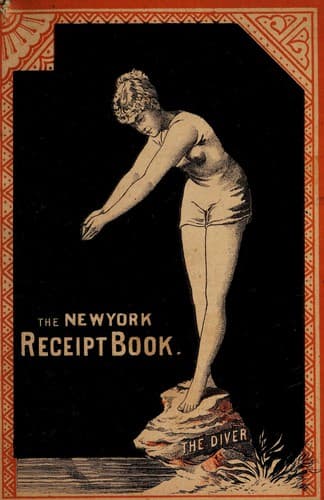
The New York receipt book
1882D.B. Dewey & Co · 25 readable pages · 83 recipe records · general household cookbook with embedded patent medicine advertising
From the librarian's dossier · AI-generated, grounded in the scanned text
The New York Receipt Book (1882) is a slim, commercially produced household cookbook issued by D.B. Dewey & Co., a firm that also sold patent medicines. Readers today will find it to be as much an advertising pamphlet as a cookbook: recipes for eggs, cakes, pies, salads, and pickles sit alongside extensive promotional material for Centaur Liniment and Wei De Meyer's Catarrh Cure. The cooking content is practical and domestic in scope, covering everyday dishes like boiled and shirred eggs, tea cakes, gingerbread, mince and lemon pie, salad dressings, and preserved goods such as tomato catsup and pickled peaches. This mixture reflects a common publishing strategy of the era, in which recipe collections were distributed as vehicles for medicine advertising, with testimonials from clergy, physicians, and even P.T. Barnum lending borrowed authority to the products. Modern readers should approach the book as a hybrid artifact: part practical cookery reference, part patent medicine marketing document. It offers a window into how food, health claims, and commerce intertwined in the consumer culture of the 1880s, though the actual recipe content is brief relative to the promotional material surrounding it.
The book as represented here consists of two sections. Section 2 mixes a run of food recipes, organized loosely by dish type (eggs, cakes, pies, salads, pickles and preserves), with interspersed testimonials for Centaur Liniment and Wei De Meyer's Catarrh Cure. Section 3 is almost entirely a standalone advertising supplement for the Catarrh Cure, consisting of testimonials, symptom descriptions, and purchasing instructions. There is no evidence of an index, chapter numbering system, or thematic table of contents beyond the recipe headings and advertisement subheadings listed in the summaries.
Recipes from this book
83 records extracted from the text, showing the first 50 in reading order. Each links to a modern interpretation.
Read the book
25 readable pages. A dot marks pages with recipe records.