
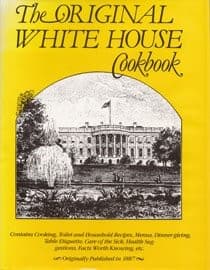
Original White House Cookbook
1887Hugo Ziemann, F. L. Gillette, Hugo Zimmerman, mrs gillette · 376 readable pages · 1,339 recipe records · general household cookbook and domestic management encyclopedia
From the librarian's dossier · AI-generated, grounded in the scanned text
The Original White House Cookbook (1887), credited to Hugo Ziemann and Mrs. F. L. Gillette, is a sprawling late-Victorian household manual that combines a full culinary encyclopedia with home medicine and domestic management advice. Organized around the rhythms of a well-run nineteenth-century American kitchen, it opens with carving instruction and stock-making before moving through soups, fish and shellfish, poultry and game, the full range of butcher's meats, sauces, vegetables, eggs and cheese, breads and breakfast cookery, an enormous run of cakes, pies, custards, puddings, frozen desserts, preserves and confections, and finally beverages. The book then shifts registers entirely, offering sections on invalid cookery, home remedies, cleaning and stain removal, soap and toiletry making, hair and complexion recipes, textile dyeing, table etiquette, and a closing index padded with publisher advertisements. With over 1,300 anchored food recipes alongside smaller clusters of household and medicinal entries, it functions as both a working recipe collection and a general guide to running a genteel American household. The book's association with the White House name and its inclusion of sample holiday menus give it a veneer of national domestic authority, while its immense breadth reflects the period's appetite for all-in-one household reference works sold through subscription and colportage trade. Modern readers will find it a rich window into upper-middle-class American foodways and housekeeping of the 1880s.
The cookbook proceeds in a logical kitchen sequence: carving and stock (section 1), soups (sections 2-3), fish and shellfish (sections 3-5), poultry and game (sections 5-7), butcher's meats including beef, veal, lamb, and pork (sections 7-10), sauces and salads (sections 11-12), pickles and preserved condiments (sections 12-13), vegetables (sections 13-14), eggs, cheese, and sandwiches (section 15), breads and breakfast cakes (sections 16-18), cakes and frostings (sections 18-21), pies and pastry (sections 21-22), custards and creams (sections 22-24), molded and frozen desserts (sections 24-25), puddings and their sauces (sections 25-28), preserves, jellies, and candies (sections 28-30), beverages and invalid cookery (sections 30-32), home remedies (sections 32-33), household cleaning and maintenance (sections 33-35), toilet and grooming preparations (sections 35-36), textile dyeing and table etiquette (section 37), and a closing index with advertisements (section 38). Numbered variant recipes (for example multiple lemon pies or chocolate cakes) and running section headings throughout suggest the book was designed for reference use rather than linear reading.
Recipes from this book
1,325 records extracted from the text, showing the first 50 in reading order. Each links to a modern interpretation.
Read the book
376 readable pages. A dot marks pages with recipe records.