
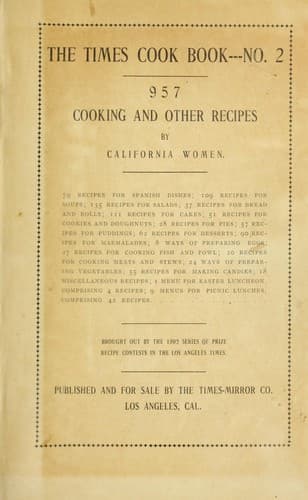
The Times cook book, no. 2
1905Los Angeles Times · 176 readable pages · 861 recipe records · community-submitted regional household cookbook
From the librarian's dossier · AI-generated, grounded in the scanned text
The Times Cook Book No. 2 is a 1905 community cookbook compiled by the Los Angeles Times from recipes submitted by California women, many won through prize contests. With over 860 anchored recipe entries, it offers a sweeping view of home cooking in early twentieth-century Southern California. The book opens with an unusually prominent section of Spanish and Mexican dishes, then moves through soups, salads, breads, sandwiches, cakes, pies, puddings, desserts, marmalades, eggs, fish and fowl, meats, vegetables, candies, and miscellaneous household preparations. Each recipe is typically credited to a named contributor with a town or address, giving the collection a strong regional and communal character, drawing from Los Angeles, Pasadena, Long Beach, Santa Ana, Ventura, and other Southern California locales. Readers will find both economical family dishes and more elaborate entertaining fare, including menus for Easter luncheon and picnic outings. The heavy presence of citrus marmalade recipes, referencing navel and Valencia oranges, reflects the region's agricultural identity. This is not a single authorial voice but a mosaic of contributed household knowledge, useful today as a record of what California home cooks were making, sharing, and competing over at the turn of the century.
The book is organized into broad food categories that unfold roughly in this order across the sections: Spanish Dishes (sections 1-2), Soups (sections 2-4), Salads (sections 6-7), Bread and Rolls (section 7), Sandwiches and Cakes (sections 8-9), Pies and Puddings (sections 11-12), Desserts and Marmalades (sections 13-15), Eggs and Fish and Fowl (section 15), Meats and Stews, Vegetables, and Miscellaneous (section 16), special menus including Easter Luncheon and Picnic Lunches (section 17), and Home-Made Candies (sections 17-18). Within each category, recipes are numbered sequentially and generally credited to individual contributors with their city or town. The final pages of section 18 list prize-winning recipes from a Times cooking contest by category, underscoring the contest-driven origin of much of the material.
Recipes from this book
861 records extracted from the text, showing the first 50 in reading order. Each links to a modern interpretation.
Read the book
176 readable pages. A dot marks pages with recipe records.