
The St. Mungo cookery book
1904Jean Lambie · 90 readable pages · 473 recipe records · general household cookbook (community compiled)
From the librarian's dossier · AI-generated, grounded in the scanned text
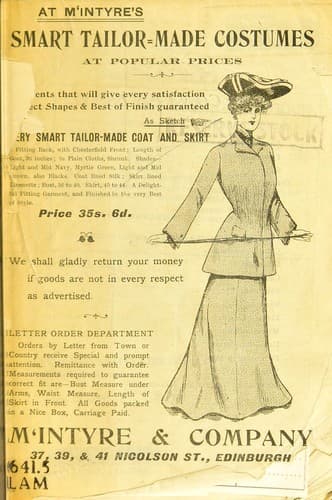
The St. Mungo Cookery Book is a 1904 community cookbook compiled by Jean Lambie in Edinburgh, gathering recipes from contributors across Scotland, England, and America. Its nearly 500 anchored food records span the full range of Edwardian domestic cooking, from soups, fish, and meat dishes through puddings, cakes, preserves, sweets, and invalid cookery, closing with a section on traditional Scottish festival dishes and household hints. The book reflects a community-sourced compilation rather than a single author's personal collection, with many recipes attributed to named contributors and their locations, giving it the character of a charitable or church-affiliated fundraising cookbook typical of the era. Alongside recipes, it contains period advertisements for commercial products like self-raising flours and custard powders, situating it firmly within the early twentieth-century shift toward convenience foods. Modern readers will find a mix of humble family fare and elaborate Victorian showpiece dishes, sickroom cookery for invalids, and a small number of household and medicinal entries. The inclusion of Scottish festival dishes such as Yule Sowens and Beef-Brose alongside international dishes like Yuchna (a Syrian stew) and German or American contributions makes this a useful window into how a Scottish household cookbook of 1904 absorbed both local tradition and wider culinary influence.
The book is organized into broad culinary categories that progress through a full meal repertoire: soups and fish open the collection, followed by meat dishes, vegetables, salads, and sauces. A very large middle portion is devoted to puddings, custards, creams, and jellies (sections 4 and 5), followed by egg dishes and an extensive baking section covering breads, cakes, scones, and griddle cakes (sections 6 and 7). Preserves, jams, and beverages follow, then sweets and confections, and a substantial invalid cookery section addressing sickroom food (section 8). The book closes with Scottish festival dishes, household hints, cleaning and laundry advice, seasonal produce calendars, and a glossary of terms and measures (section 9). Headings throughout are individual recipe titles or short topical headers rather than long descriptive chapters, and contributor names and addresses appear throughout, marking this as a compiled community volume.
Recipes from this book
473 records extracted from the text, showing the first 50 in reading order. Each links to a modern interpretation.
Read the book
90 readable pages. A dot marks pages with recipe records.